09
Turnstiles, bollards & barriers
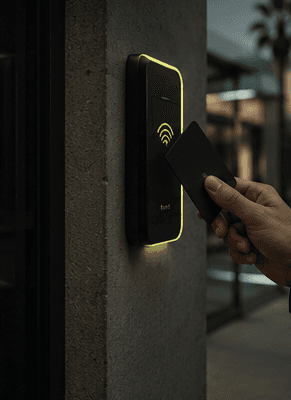
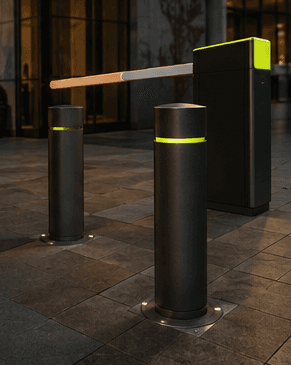
Physical entry control at the perimeter — turnstiles, bollards and car barriers integrated with access and ANPR.
Turnstiles · Car barriers · ANPR-integrated

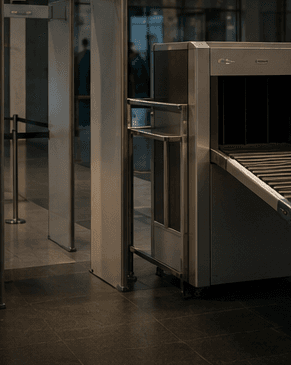
Walk-through detection, hand-held screening and baggage X-ray for premises that screen at the door — sited to the flow, integrated to the checkpoint and operated by people who have been trained.
Design · Supply · Install · Integrate · Maintain
Screening is where security is most visible to the visitor. A well-designed checkpoint moves people through with dignity and speed; a badly designed one creates a crowd at the door that is itself a risk. The equipment is the smaller part of the answer.
We design the checkpoint: the lanes, the divest tables, the search area, the position of the operator and the cameras, the flow of bags and people, the fallback when a lane fails. Then we select detectors and X-ray units to match the threat, the volume and the environment.
Screening equipment is integrated with the rest of the perimeter — the turnstiles that release on a clear pass, the cameras that record the lane, the command room that sees alarm rates — so it is a system rather than a set of machines.
At a glance
Multi-zone detectors that show the operator where on the body the alarm is.
Secondary search for resolving walk-through alarms.
Image-based inspection of bags, parcels and mail.
Lanes, divest, search and fallback arranged for throughput and dignity.
Lane count and sensitivity settings matched to the peak and the threat level.
Electronic article surveillance for retail entrances.
Alarm rates and lane performance reported to the command room.
Screeners trained on the equipment and the search procedure.
Detectors configured for nearby steel, floors and interference.
Turnstiles, access control, CCTV and the command room.
Every project is composed from a small number of well-understood parts. These are the ones that matter for this discipline.
Walk-through metal detectors
Multi-zone pedestrian screening at the door.
Hand-held metal detectors
Secondary search and small-site screening.
Under-vehicle inspection
Mirrors and imaging for vehicle checkpoints.
Portable & event detectors
Temporary screening for events and gatherings.
Small-parcel X-ray
Mail rooms and reception desks.
Baggage X-ray
Hand luggage and bags at lobby checkpoints.
Large-tunnel X-ray
Freight, pallets and hold luggage.
Mobile X-ray
Relocatable units for temporary checkpoints.
EAS antennas & tags
Anti-theft detection at retail exits.
Divest tables & trays
The furniture that makes a lane work.
Lane turnstiles
Release on a clear pass, hold on alarm.
Checkpoint cameras
Record the lane and the search.
The operator's position, the search area and the camera angle are designed together, so every alarm is resolved in view and on record.
Arrival
Visitors and bags reach the checkpoint
Divest & X-ray
Bags inspected on screen
Walk-through detector
Person screened; zone indicated on alarm
Secondary search
A hand-held detector resolves the alarm
Turnstile / release
A clear pass releases the lane
Cameras & command room
The lane is recorded; alarm rates reported
Safe & Sound carries every discipline, so this system is designed from day one to talk to the others on the project.
Turnstiles & barriers
The lane releases on a clear pass and holds on an alarm.
Access control
Staff bypass lanes on credential; visitors are screened.
CCTV
Cameras record the lane and the search, and give the command room the picture.
Command rooms
Alarm rates, lane status and queue cameras on the operator's screen.
Intrusion detection
Panic buttons at the checkpoint reach the security office silently.
A typical sequence
Bags go to X-ray while the visitor walks through the detector.
A zone alarm on the detector shows the operator the left ankle.
A hand-held search resolves it; the lane turnstile releases.
The camera has recorded the search; the command room sees the lane's alarm rate rise and opens a second lane.
Screening at the door is standard where the public meets a sensitive building: government and courts, hotels and resorts, corporate headquarters, malls and retail, universities, petroleum facilities and transport infrastructure.
A deliberately narrow stack, supplied through authorised channels only. The final selection is made per project, against the specification and the budget.


For metal detection we work with Garrett walk-through and hand-held detectors, and with ZKTeco for walk-through and X-ray inspection where the project specifies it. X-ray units for larger checkpoints are specified per project against the consultant's requirement.
Threat and throughput assessment, checkpoint layout and lane design, equipment selection and sensitivity strategy, floor and environment survey, camera and turnstile integration, and a fallback plan for lane failure.
Detectors, X-ray units and checkpoint furniture from authorised channels, with radiation-safety documentation for X-ray equipment compiled for the client.
Equipment positioned to the design and calibrated to the environment, integrations proven with turnstiles and cameras, and screeners and supervisors trained on procedure and equipment.
Checkpoint drawings, equipment settings, calibration and safety records, operating procedures, training records and a lifecycle plan.
Scheduled calibration and test-piece checks, X-ray image and safety verification, mechanical servicing and operator refresher training.
We stay involved after handover. Every system leaves us with a maintenance path, a named point of contact and a report you can read.
Screening equipment must be trusted every day, which means it must be tested every day. We keep the calibration, the records and the operators current.
See the three maintenance tiersSystems that are designed alongside this one on most projects.
Tell us about the project. We’ll shape the solution around it — the design, the bill of quantities, the named team and three maintenance options.