02
Access control
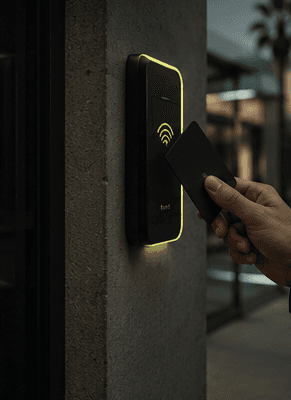
Card, mobile and biometric access across every door and gate, with a permission map you actually understand.
Card & mobile · ANPR gates · Named permissions

Physical entry control at the perimeter — turnstiles, bollards, gates and car barriers integrated with access control and ANPR, so the credential and the hardware act as one.
Design · Supply · Install · Integrate · Maintain
Access control decides; barriers enforce. A turnstile makes sure one credential admits one person. A boom barrier or bollard makes sure a vehicle is identified before it enters. And a rising road blocker makes sure that a vehicle that should not enter, cannot.
We design entry control to the flow of the site: how many people at the morning peak, how many cars at the gate, what happens to deliveries and visitors, where a fire evacuation must pass. Then we select hardware that handles the throughput without queues and the security level without compromise.
Every barrier is driven by the access and ANPR systems and watched by the cameras, so the guard on the gate has the picture, the plate and the permission on one screen.
At a glance
Turnstiles and speed gates sized to the peak, with accessible lanes.
Tailgating and piggybacking detection at the lane.
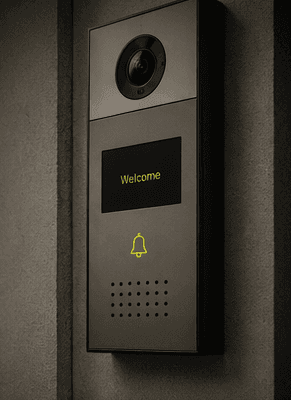
ANPR, long-range tags and intercom at the gate.
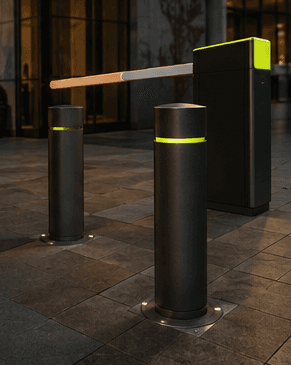
Crash-rated bollards and road blockers where the risk requires it.
Loops, signals and lane logic for entry and exit.
Free egress on fire alarm and power loss, by design.
Separate lanes, temporary credentials and a guard override.
Local override, intercom and camera view at the gate.
Every passage, plate and override recorded with the access system.
Access control, ANPR, CCTV, intercom and the command room.
Every project is composed from a small number of well-understood parts. These are the ones that matter for this discipline.
Tripod turnstiles
Compact and robust for staff entrances and sites.
Speed gates & optical turnstiles
Glass-wing lanes for lobbies: fast and elegant.
Full-height turnstiles
Unattended perimeters and secure sites.
Swing gates & wide lanes
Accessible and luggage-friendly passage.
Portable & event barriers
Temporary crowd control.
Boom barriers
The standard for car parks and compound gates.
Automatic bollards
Rising bollards for pedestrian zones and secure entrances.
Crash-rated bollards & road blockers
Hostile-vehicle mitigation for government and critical sites.
Sliding & swing gates
Secure gates for villas and compounds.
Tyre killers & spikes
One-way enforcement at exits.
Traffic loops & signals
Detection and lane control.
ANPR cameras
Plate reading at the lane.
Long-range readers
Tags and UHF cards for residents.
Gate intercom stations
Visitors call the guard or the resident.
Barrier controllers
Safety, loops and integration logic.
Guard consoles
Local override and status.
Safety is designed in: loops and sensors stop a barrier meeting a car, and fire alarm or power loss releases the pedestrian lanes.
Vehicle / person
Approaches the lane
Identification
Plate, tag, card, face or intercom
Access control
The permission is checked and logged
Barrier controller
Safety loops and the open command
Barrier / turnstile
Opens for one, closes behind
Cameras & command room
Watch, record and override
Safe & Sound carries every discipline, so this system is designed from day one to talk to the others on the project.
Access control
The same credentials and permission map drive the pedestrian and vehicle lanes.
CCTV & ANPR
Plates read at the gate open the barrier; the cameras record the passage.
Intercom
Visitors call the guard or the resident from the gate; the release comes from the same system.
Metal detectors & X-ray
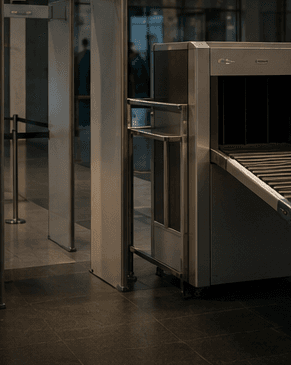
Screening lanes and turnstiles designed as one checkpoint where the site screens at the door.
Command rooms
Lane status, throughput and tailgating alarms on the map, with override from the desk.
A typical sequence
Speed gates open on card or phone; visitors are directed to a reception lane.
A tailgating attempt closes the wings and raises an alert with the camera view.
A courier at the vehicle gate is read by ANPR against the delivery schedule.
The guard sees the plate, the driver and the permission on one screen and lets them through.
Physical entry control belongs at any perimeter with a queue or a threat: compounds and gated communities, corporate campuses, government and critical sites, hotels and resorts, factories, petroleum facilities and universities.
A deliberately narrow stack, supplied through authorised channels only. The final selection is made per project, against the specification and the budget.




For barriers and gates we work with FAAC automation, and with ZKTeco, Hikvision and Dahua turnstiles and lane hardware, driven by the access and ANPR systems specified on the project.
Flow and throughput study, lane and gate layout, hardware selection to the security level and the traffic, civil works and foundations, safety design, ANPR and intercom integration, and coordination with the landscape and road design.
Turnstiles, barriers, bollards, gates and controllers from authorised channels, with civil works coordinated before delivery.
Foundations and ducts with the civil contractor, hardware set and levelled, safety devices commissioned, integration with access, ANPR and intercom proven lane by lane, and guards trained.
Lane schedule, as-built and civil drawings, controller settings, safety test records, operator guide and a lifecycle plan for motors, mechanisms and wear parts.
Scheduled mechanical servicing, safety device testing, lubrication and adjustment, and a report of what was checked.
We stay involved after handover. Every system leaves us with a maintenance path, a named point of contact and a report you can read.
Barriers are the only security equipment that moves all day, every day. Mechanisms wear, loops fail and safety edges drift; servicing is what keeps a lane both open and safe.
See the three maintenance tiersSystems that are designed alongside this one on most projects.
Tell us about the project. We’ll shape the solution around it — the design, the bill of quantities, the named team and three maintenance options.